Learning how to train for a century bike ride starts with understanding that completing 100 miles is not simply a matter of riding longer every weekend. A successful century requires a combination of endurance, pacing, recovery, nutrition, hydration, bike comfort, and preparation for the specific terrain you will encounter.
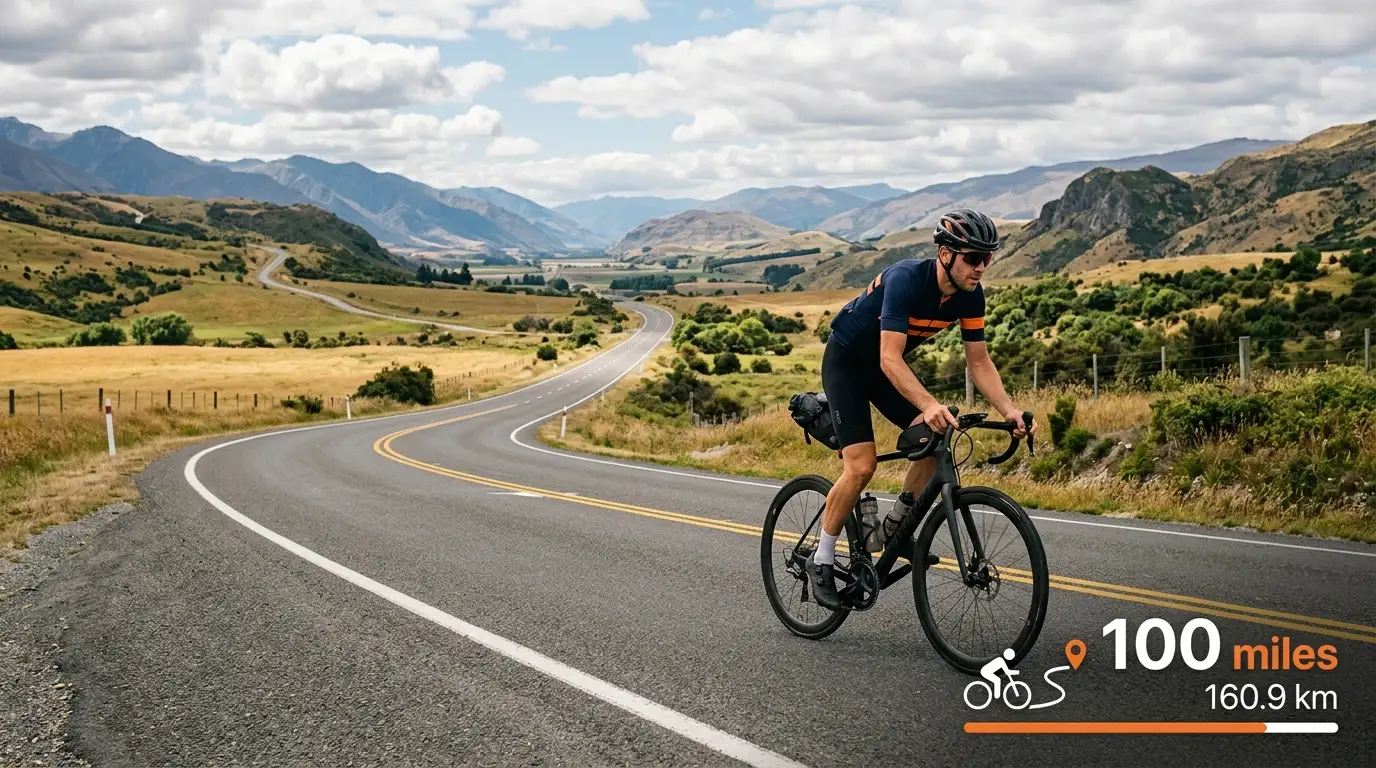
A cycling century is 100 miles, or approximately 160.9 kilometers. For a cyclist who already has a reasonable riding base, 12 to 16 weeks can provide enough time to prepare. Riders with less experience may need longer, while experienced cyclists may require less time.
The most important part of how to train for a century bike ride is matching your training plan to your current fitness rather than copying a schedule designed for someone else.
This guide provides a practical 16-week progression, explains how far your longest training ride should be, covers fueling and hydration, and shows how to adapt your preparation for metric centuries, half centuries, mountain-bike centuries, and double centuries.
How Long Does It Take to Train for a Century Bike Ride?
One of the first questions cyclists ask when learning how to train for a century bike ride is how many weeks they actually need.
There is no universal answer.
A cyclist who can already ride 50 miles comfortably may need only several weeks of specific preparation. Someone whose longest ride is 15 miles should not immediately begin a demanding 12-week century program.
As a general starting point:
| Current longest comfortable ride | Possible preparation period |
|---|---|
| Under 20 miles | 16–24+ weeks |
| 20–30 miles | Around 16 weeks |
| 30–40 miles | Around 12–16 weeks |
| 40–60 miles | Around 8–12 weeks |
| 60+ miles | Around 6–10 weeks |
These are guidelines rather than strict requirements.
Your available training time, age, cycling experience, terrain, elevation, weather, recovery ability, and event goals all affect the appropriate schedule.
If you are completely new to cycling, spend additional time building basic riding consistency before beginning a century-specific program.
What Does It Take to Complete a Century?
Understanding how to train for a century bike ride becomes easier when you break the challenge into separate components.
Endurance
You need enough aerobic endurance to remain on the bike for several hours without excessive fatigue.
Pacing
Starting too quickly can cause problems later. A sustainable pace is more important than impressive speed during the first part of a century.
Nutrition
A 100-mile ride can last many hours, so you need a strategy for consuming carbohydrates throughout the ride.
Hydration
Fluid requirements vary between cyclists and depend on temperature, humidity, body size, clothing, and effort.
Recovery
Training adaptations occur when your body recovers from training. More riding is not automatically better if you cannot recover from it.
Bike comfort
Saddle discomfort, hand numbness, poor positioning, inappropriate clothing, or mechanical problems can become major issues after several hours.
Therefore, how to train for a century bike ride is really a question of preparing your entire cycling system rather than simply increasing mileage.
Before You Start: Determine Your Current Fitness
Before following a 100-mile bike ride training plan, establish your starting point.
Ask yourself:
What is my longest comfortable ride?
A 30-mile ride that leaves you unable to ride the following day tells you something different from a 30-mile ride that you recover from normally.
How many days can I realistically train?
A consistent three- or four-day schedule is usually more useful than planning six days and repeatedly missing workouts.
How much time can I spend riding?
Two cyclists may have the same goal but completely different schedules.
What is the century route like?
A flat road century, mountainous road century, gravel event, and mountain-bike century require different preparation.
Your answers determine how how to train for a century bike ride should be approached in your particular situation.
The 16-Week Century Bike Ride Training Plan
This plan is designed for someone who can already ride approximately 25 miles comfortably.
If your current longest ride is significantly shorter, build a basic cycling foundation before starting Week 1.
The objective is not to ride 100 miles in training as quickly as possible. Instead, you gradually increase your long-ride distance, include easier weeks, practice event-specific skills, and reduce training before the event.
| Week | Long ride | Main focus |
|---|---|---|
| 1 | 25 miles | Establish consistency |
| 2 | 30 miles | Easy endurance |
| 3 | 35 miles | Endurance + controlled efforts |
| 4 | 25 miles | Recovery |
| 5 | 40 miles | Endurance |
| 6 | 45 miles | Endurance + moderate efforts |
| 7 | 50 miles | Longer endurance |
| 8 | 35 miles | Recovery |
| 9 | 55 miles | Endurance |
| 10 | 60 miles | Endurance + fueling practice |
| 11 | 70 miles | Long-distance preparation |
| 12 | 45 miles | Recovery |
| 13 | 60 miles | Event-specific preparation |
| 14 | 75–80 miles | Peak endurance |
| 15 | 40–45 miles | Taper |
| 16 | 100 miles | Century |
This schedule is a framework rather than a medical or individualized coaching prescription. Adjust it according to your current ability and recovery.
How to Structure Each Training Week
A basic week can look like this:
- Monday: Rest
- Tuesday: 45–60 minutes of easy-to-moderate cycling
- Wednesday: Strength training or easy cycling
- Thursday: 60–75 minutes with controlled tempo or intervals
- Friday: Rest or very easy cycling
- Saturday: Long endurance ride
- Sunday: Easy recovery ride or rest
The long ride is the most obvious part of how to train for a century bike ride, but the shorter rides also have a purpose.
Easy rides allow you to accumulate training without excessive fatigue. Moderate or interval sessions can develop fitness, while rest days allow you to absorb the workload.
You do not need to make every ride difficult.
Weeks 1–4: Build Your Base
During the first four weeks, focus on consistency.
Your long ride progresses from approximately 25 to 35 miles before dropping back during the recovery week.
Most riding should feel controlled.
Use these rides to establish good habits:
- Eat before you become extremely hungry.
- Drink regularly.
- Maintain a comfortable riding position.
- Pay attention to saddle and hand discomfort.
- Practice riding at a sustainable pace.
- Avoid turning every ride into a competition.
The fourth week reduces the long ride to allow recovery.
This recovery period is an important part of how to train for a century bike ride because adaptation requires both training stress and recovery.
Weeks 5–8: Build Endurance
The second training block increases the longest rides toward 50 miles.
At this stage, begin making your training more similar to the event.
If your century contains significant climbing, include climbing in your training. If it is likely to be hot, practice your hydration strategy under appropriately safe conditions.
You can also begin practicing the food and drinks you expect to use during the event.
Week 8 again reduces the long ride.
The purpose is to prevent every week from becoming progressively more exhausting.
Weeks 9–12: Extend Your Long Rides
The long rides now reach approximately 55, 60, and 70 miles.
These rides are valuable because they expose problems that may not appear during short rides.
You may discover that:
- Your saddle becomes uncomfortable after several hours.
- You need more food than expected.
- Your bottle capacity is insufficient.
- Your pacing is too aggressive.
- Your hands or neck become uncomfortable.
- Your clothing causes friction.
- Your route contains more climbing than anticipated.
Solving these problems during training is one of the most practical aspects of how to train for a century bike ride.
Do not wait until mile 75 of the event to discover that your equipment or nutrition strategy does not work.
Weeks 13–15: Peak and Taper
The final build period includes your longest training ride.
For many first-time century riders, approximately 70–80 miles is enough to establish substantial endurance without requiring a full 100-mile training ride.
A 75- or 80-mile ride also provides an excellent opportunity to test your complete event strategy.
Use this ride to practice:
- Your planned pace
- Your cycling clothes
- Your shoes
- Your nutrition
- Your hydration
- Your tools
- Your route strategy
- Your equipment
After the peak ride, training volume should decrease.
This taper helps you reach the event with less accumulated fatigue.
Do You Need to Ride 100 Miles Before the Century?
No.
You do not necessarily need to complete a full 100-mile training ride before your first century.
One important principle of how to train for a century bike ride is that your longest training ride should prepare you without unnecessarily exhausting you.
A 70–80-mile peak ride can provide substantial preparation for many recreational cyclists.
Some experienced riders may choose to complete a full-distance training ride, but doing so is not automatically better.
The more important question is whether you have practiced spending several hours on the bike while successfully managing:
- Pace
- Food
- Fluids
- Equipment
- Comfort
- Recovery
If you can do those things effectively, you may be better prepared than someone who completed 100 miles once but ignored pacing and nutrition.
How Hard Should Your Training Rides Be?
You do not need expensive equipment to control training intensity.
Rate of perceived exertion, or RPE, can provide a simple guide.
| Effort | Description | Main purpose |
|---|---|---|
| Very easy | Almost effortless | Recovery |
| Easy | Comfortable conversation | Endurance |
| Moderate | Talking requires effort | Tempo |
| Hard | Short phrases | Intervals |
| Very hard | Difficult to sustain | Short efforts |
Most of your long-distance training should be controlled.
If you use a power meter or heart-rate monitor, use your established training zones rather than copying another cyclist’s numbers.
For someone learning how to train for a century bike ride, one of the biggest lessons is that long-distance cycling rewards sustainable effort more than repeatedly riding at maximum intensity.
How to Fuel a 100-Mile Bike Ride
Nutrition is a major part of century preparation.
During prolonged endurance exercise, carbohydrate provides an important source of energy. The Australian Institute of Sport describes approximately 30–60 grams of carbohydrate per hour for endurance exercise lasting 1–2.5 hours and up to around 90 grams per hour for longer-duration endurance activities, depending on the athlete and strategy.
For a first century, a practical starting point may be around 30–60 grams per hour, provided you tolerate it well.
Possible carbohydrate sources include:
- Energy gels
- Sports drinks
- Energy bars
- Bananas
- Sandwiches
- Rice-based foods
- Other carbohydrate-rich foods you tolerate during exercise
Do not wait until you feel completely depleted before eating.
Instead, establish a regular fueling schedule during training.
The exact amount that works for you should be practiced before event day.
Practice Your Nutrition Before the Century
An important part of how to train for a century bike ride is training your digestive system along with your legs.
If you normally eat very little while riding, suddenly consuming a large quantity of gels and sports drinks during the event may cause gastrointestinal problems.
Use your longer training rides to determine:
- Which foods you tolerate
- How frequently you prefer to eat
- How much carbohydrate you can comfortably consume
- Which drinks work for you
- What foods become difficult to eat after several hours
Never make your first experiment with a new nutrition strategy during the century itself.
How Much Should You Drink?
There is no universal amount of water that every cyclist should consume.
Fluid needs depend on factors including:
- Temperature
- Humidity
- Sweat rate
- Body size
- Clothing
- Exercise intensity
- Ride duration
The American College of Sports Medicine recommends individualized fluid-replacement strategies and also recognizes the risks associated with excessive fluid intake.
Instead of blindly following a fixed number, learn your approximate sweat losses during training.
A particularly useful strategy is to observe body weight before and after representative long rides while accounting for the fluids you consumed.
The goal is not simply to drink as much as possible.
How to Pace a Century Ride
Pacing may determine whether the final 25 miles feel manageable or extremely difficult.
The first miles can feel deceptively easy because you are fresh.
Other riders may also encourage you to ride faster than planned.
Resist the temptation if the pace is not sustainable.
A simple approach is:
Miles 0–25: Conservative
Miles 25–50: Settle into your sustainable rhythm
Miles 50–75: Maintain pace and continue fueling
Miles 75–90: Evaluate your remaining energy
Miles 90–100: Increase effort only if you have enough left
These are not mandatory pacing zones.
They illustrate the central idea behind how to train for a century bike ride: learn to conserve energy early so that you have useful reserves later.
If the route is hilly, avoid racing every climb.
A controlled effort early can make a significant difference during the final portion of the ride.
Prepare Your Bike for 100 Miles
Fitness alone cannot prevent a mechanical problem.
Before your longest rides, inspect:
- Tires
- Wheels
- Brakes
- Chain
- Gears
- Saddle
- Bottle cages
- Shoes
- Cleats
- Accessories
Carry appropriate basic repair equipment for your bike.
Depending on your setup, that may include a spare tube, tire levers, pump or inflator, tubeless repair equipment, and a multitool.
Your bike should also be comfortable enough for several hours of continuous riding.
If you experience persistent pain, numbness, or unusual discomfort, investigate the cause rather than simply trying to tolerate it.
How to Train for a 100-Mile Mountain Bike Ride
Training for a 100-mile mountain-bike event requires more than copying a road-century plan.
Off-road riding can involve:
- Longer climbs
- Technical descents
- Loose surfaces
- Repeated accelerations
- Lower average speeds
- Greater bike-handling demands
Therefore, how to train for a century bike ride changes when the century takes place on a mountain bike.
Your long training rides should include terrain that resembles the event whenever practical.
Do not judge MTB preparation by mileage alone.
Time spent riding and total elevation can sometimes tell you more about the difficulty of a mountain-bike training ride than distance.
For example, a 50-mile ride containing substantial climbing and technical terrain may place a very different demand on your body than a flat 70-mile road ride.
How to Train for a Metric Century Bike Ride
A metric century is 100 kilometers, or approximately 62.1 miles.
That makes it shorter than a traditional 100-mile century but still a substantial endurance event.
If you are not ready for 100 miles, a metric century can be an excellent intermediate goal.
The basic approach to how to train for a century bike ride can also be applied to a metric century, but the peak long rides can be shorter.
A metric century can also help you practice:
- Long-distance pacing
- Fueling
- Hydration
- Bike comfort
- Route planning
- Riding for several hours
How to Train for a Half Century Bike Ride
A half century is 50 miles.
For newer cyclists, it can be an excellent milestone before attempting a full century.
If your current longest ride is around 20 miles, first focus on becoming comfortable at 30, 35, 40, and eventually 50 miles.
Once you can complete a 50-mile ride comfortably and recover normally, progressing toward 100 miles becomes a more manageable long-term project.
How to Train for a Double Century Bike Ride
A double century is approximately 200 miles, or 321.9 kilometers.
It should not be treated as simply “a century twice.”
A 200-mile ride creates substantially different demands because of the much longer time spent riding.
A cyclist preparing for a double century needs to consider:
- Long-duration endurance
- Nutrition
- Hydration
- Pacing
- Recovery
- Sleep
- Equipment reliability
- Night riding if applicable
- Route support
Someone preparing for a first century does not need to train at double-century volumes.
What If You Miss a Week of Training?
Do not attempt to cram missed training into the following week.
Suppose you planned to ride 60 miles but missed the previous week completely. That does not automatically mean you should ride 70 miles immediately.
Instead, resume at a level appropriate to your current condition.
Consistency is more valuable than trying to compensate for every missed workout.
This is particularly important when considering how to train for a century bike ride for beginners, because beginners often benefit more from steady progression than aggressive mileage increases.
What Should You Do During the Final Week?
During event week, the objective changes from building fitness to arriving recovered.
Reduce your training volume.
Short, easy rides can help you stay comfortable, but avoid trying to compensate for missed workouts.
Use the final days to prepare everything else:
- Check your bike.
- Prepare your nutrition.
- Check the route.
- Prepare clothing.
- Charge required devices.
- Check weather conditions.
- Organize tools.
- Confirm event logistics.
- Get adequate sleep.
You want to start the century feeling prepared rather than tired from a last-minute workout.
Century Ride Readiness Checklist
Before attempting 100 miles, ask yourself:
- Can I comfortably ride for several hours?
- Have I completed several long training rides?
- Have I completed a suitable peak ride?
- Have I practiced my nutrition?
- Have I practiced hydration?
- Is my bike comfortable?
- Have I tested my clothing?
- Can I deal with a basic flat or mechanical issue?
- Have I examined the route?
- Have I considered elevation?
- Do I understand my intended starting pace?
- Have I allowed adequate recovery before the event?
If several answers are “no,” identify those weaknesses before event day.
Common Century Training Mistakes
Riding Too Hard Too Early
A fast first 20 miles can make the final 30 miles dramatically harder.
Making Every Ride Difficult
Not every training ride needs to be intense. Easy endurance and recovery work are important.
Increasing Mileage Too Quickly
Large increases can make it difficult to recover and maintain consistency.
Ignoring Nutrition
Waiting until you feel depleted is not an effective way to manage a long endurance ride.
Testing New Equipment on Event Day
New saddles, shoes, clothing, nutrition products, or accessories should be tested beforehand.
Ignoring the Event Terrain
A flat road century and a mountainous century should not have identical training.
Trying to Make Up Missed Training
One giant workout cannot replace several weeks of gradual adaptation.
Forgetting the Taper
Your final week should not become your hardest training week.
A Simple Approach to Century Training
If you want the simplest possible explanation of how to train for a century bike ride, focus on five principles.
- Ride consistently: Train regularly rather than relying on occasional huge rides.
- Increase your long ride gradually: Give your body time to adapt to longer periods on the bike.
- Keep most endurance riding controlled: You need to develop the ability to keep going, not simply the ability to ride hard for a short period.
- Practice nutrition, hydration, and equipment: Your legs are only one part of a successful century.
- Arrive recovered: The purpose of training is to build fitness that you can actually use on event day.
A 100-mile ride can look intimidating when viewed as one enormous distance. Breaking it into weeks of consistent training, manageable long rides, recovery periods, and practiced race-day habits makes the challenge much easier to understand.
The best answer to how to train for a century bike ride is therefore not simply “ride 100 miles.” It is to progressively prepare your endurance, pacing, nutrition, equipment, and recovery so that you can spend many hours on the bike without exhausting yourself too early.
FAQ’s
How long should I train for a century bike ride?
For many cyclists with an established base, 8–16 weeks can be appropriate. Beginners or riders with a low current mileage base may need 16 weeks or more. Current century programs vary substantially according to starting fitness and available training time.
Do I need to ride 100 miles before my century?
No. Many training approaches peak around 70–80 miles rather than requiring a full 100-mile training ride. A full-distance practice ride can be used by some experienced riders, but it is not essential.
How many days a week should I train for a century?
Three to four cycling sessions per week can provide a practical structure for many recreational riders. One should generally be the long endurance ride, with the remaining sessions supporting endurance, recovery, or controlled intensity.
What should I eat during a 100-mile bike ride?
Carbohydrate is the primary focus during a long endurance ride. A practical starting range is around 30–60 grams per hour, while some well-trained endurance athletes use higher amounts after practicing them. The Australian Institute of Sport notes that prolonged events may use up to about 90 grams per hour depending on the strategy and tolerance.
How much water should I drink during a century?
There is no universal amount. Your fluid needs depend on sweat rate, weather, body size, clothing, intensity, and other factors. Individualized hydration is preferable to blindly following a fixed volume.
Is a metric century the same as a century ride?
No. A metric century is 100 km (62.1 miles), while a traditional cycling century is 100 miles (160.9 km).
Can a beginner train for a 100-mile bike ride?
Yes, but the timeline should match the starting point. Someone new to longer cycling may need additional base-building before beginning a conventional 12- or 16-week century plan.
What is the longest ride I should do before a century?
For many first-time riders, approximately 70–80 miles is a useful peak training range. The appropriate distance depends on your experience, recovery ability, event terrain, and overall plan.
Consistent, proactive inspection intervals extend vehicle reliability and resale value far more cost-effectively than reactive mechanical overhauls.

admin
admin is an automotive writer and technical editor at AutoSPrime, specializing in vehicle reliability and maintenance engineering.